Bavaria Loss Thresholds: Spielbank Safety Settings
Spielbank operators in Bavaria run on a hair-trigger exposure model that most casual players never see, and the loss threshold chain is the brutal core of it. Every slot terminal, every table float, and every automated reconciliation loop feeds into a hard-coded Bavaria loss thresholds matrix that decides, in milliseconds, whether a session keeps running or gets throttled into the dirt. This isn't player protection theater — it's a survival mechanism engineered to keep the house ledger from bleeding out during a volatility spike. 🎰
The numbers are unforgiving. Under the state gaming framework, a single terminal that trips a cumulative loss deviation beyond roughly 1.8 standard deviations from its rolling baseline gets flagged for a soft lock. Cross the second tier — the hard stop near 2.6 sigma — and the machine enforces a mandatory cool-off before the meter even thinks about accepting another wager. The Spielbank safety settings behind this are no accident; they're tuned against historical drawdown curves from the Bavarian hall network, and they bite hard when a variance storm rolls in.
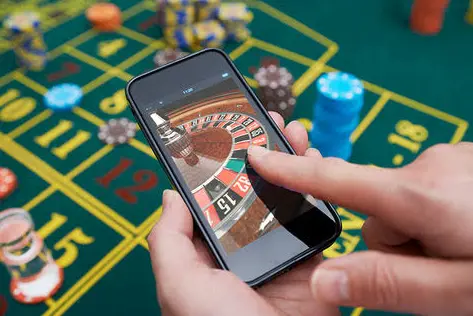
Here's where the hardware inner workings get nasty. Modern Spielbank slot cabinets push telemetry through an encrypted audit bus roughly every 400 milliseconds. The threshold engine sitting on that bus doesn't just watch the player's balance — it watches the coin-in to coin-out ratio, the hit frequency drift, and the theoretical hold deviation in parallel. If any single vector breaches its configured ceiling, the safety setting fires an override that caps the max bet and logs the event to the central monitoring node. Operators who ignore these flags are begging for a compliance audit that will strip their license down to the studs.
The Threshold Tiers Nobody Talks About
There are four distinct loss bands baked into the system, and each one triggers a different response. Tier one is a silent observation flag — the machine keeps running but every spin gets timestamped for later forensic review. Tier two enforces a progressive bet ceiling that tightens with each subsequent loss trigger. Tier three introduces the notorious velocity brake, which stretches the spin interval and forces a mandatory pause after a defined number of rapid-fire losses. Tier four is the nuclear option: a full terminal lockdown that only a floor manager with elevated clearance can lift. The loss threshold configuration for each tier is calibrated per venue and per cabinet generation, which is why two halls in the same city can behave completely differently under identical pressure.

The algorithmic layer underneath is where the real engineering lives. The threshold engine uses a weighted moving average of the last 2,000 outcomes combined with a volatility scaler that widens or narrows the trigger band based on the cabinet's historical dispersion. A high-variance unit gets a wider band because its natural swings are larger; a low-variance unit gets a tight leash. This adaptive approach is why static threshold tables from older gaming regimes are garbage — they can't distinguish between a normal cold streak and a genuine fault condition. The Spielbank safety settings are dynamic, and they're rebuilt every time the cabinet's firmware gets a version bump. 🛠️
One more technical detail that separates the pros from the amateurs: the loss threshold engine runs on an isolated cryptographic core that's physically separated from the game logic processor. This means the safety settings can't be spoofed by a compromised game module, and the threshold audit trail is tamper-evident down to the bit level. If the safety core detects a mismatch between the game processor's reported outcome and its own independent calculation, it triggers an immediate lockout and dumps the entire session buffer to the forensics queue. That kind of hardware-level isolation is what keeps the Bavarian operation defensible when the regulators come knocking with their packet sniffers and logic analyzers.